Production backend systems
Java 17/Kotlin, Spring Boot, REST/OpenAPI, PostgreSQL, distributed workflows, authentication, and CI/CD for business-critical services.
Alejandro Saez Castells / Valencia, Spain
I build backend services, smart contracts, DeFi infrastructure, signed-intent protocols, blockchain integrations, and workflow systems where roles, permissions, state, deadlines, and reliability matter.
Java, Spring Boot, Node.js, PostgreSQL, Keycloak, OpenAPI, CI/CD.
Solidity, EVM, Foundry, ERC-4626, EIP-712, access control, fork testing, fuzzing.
Marketplace, aviation, travel, identity, workflow, and developer-tooling systems.
type ProductionSystem = {
  boundaries: "explicit";
  state: "reliable";
  failureModes: "designed";
  operations: "observable";
};What I bring
The differentiator is not a longer technology list. It is the ability to model a real process, define reliable boundaries, and carry it through contracts, services, integrations, and product flows.
Java 17/Kotlin, Spring Boot, REST/OpenAPI, PostgreSQL, distributed workflows, authentication, and CI/CD for business-critical services.
Keycloak, OAuth 2.0, OIDC, JWT, federation, organization-aware authorization, role/claim synchronization, and security-sensitive state transitions.
Solidity/EVM, Foundry, DeFi integrations, signed-intent protocols, access control, fuzzing, stateful invariants, and explicit threat boundaries.
Industrial automation discipline applied to software: model state clearly, design failure paths, automate validation, investigate production evidence, and ship durable fixes.
Selected work
Adaptive Yield demonstrates ERC-4626 vault engineering, Aave V3 and Morpho integration, constrained rebalancing, Base fork tests, fuzzing, and invariants. OrderForge shows signed-intent settlement and adversarial smart-contract design. CookingPro anchors the portfolio in sustained ownership of a live two-sided product.
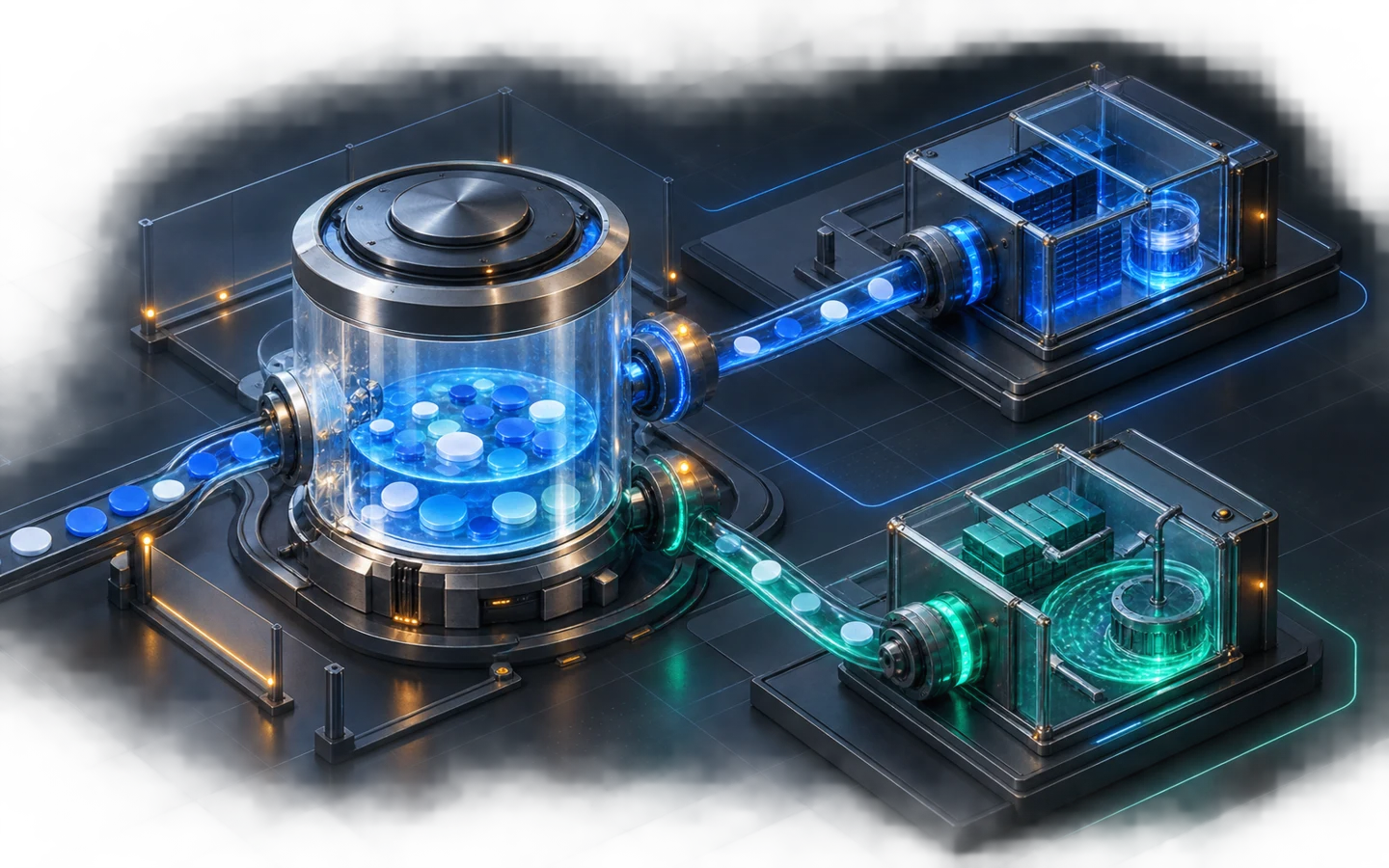
DeFi protocol engineering where ERC-4626 accounting, external-strategy trust boundaries, liquidity, risk constraints, and adversarial testing have to agree before any capital is considered.
A risk-aware ERC-4626 USDC yield-optimization protocol on Base with Aave V3 and Morpho adapters, constrained rebalancing, fork testing, fuzzing, and stateful invariants.
Signed-order protocol engineering where cryptographic intent, lifecycle state, settlement math, and adversarial testing all have to agree.
A non-custodial EIP-712 signed limit-order settlement protocol with partial fills, ERC-1271 smart-wallet signatures, replay protection, and stateful Foundry invariants.

Production restaurant operations and customer ordering across three mobile applications.
A production restaurant-management and customer-ordering platform spanning an Android management application plus Android and iOS customer experiences. I contributed across product functionality, mobile workflows, supporting APIs, quality, and releases.
Hackathon builds
Two compact public builds show policy-controlled agent payments and self-custodial team treasury workflows without overstating their deployment scope.
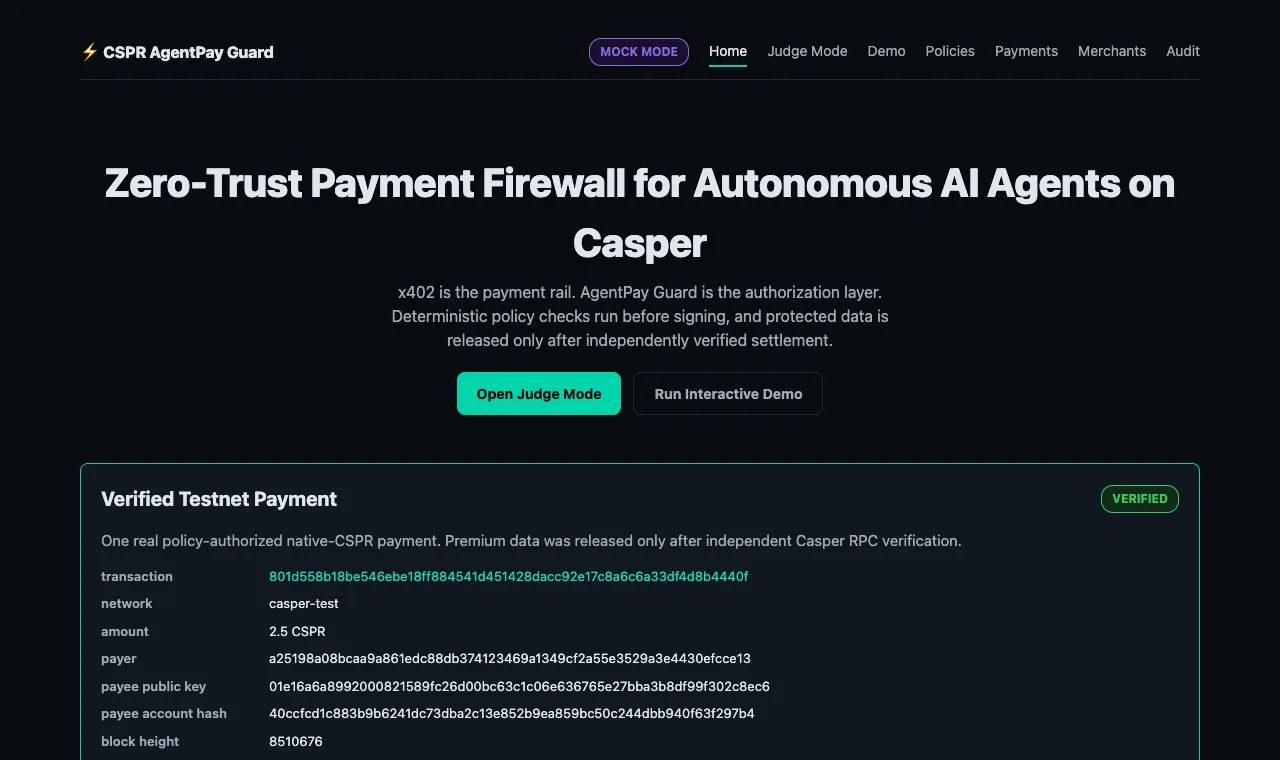
A policy-controlled payment firewall for autonomous agents using HTTP 402 and Casper Testnet proof recording.
A policy layer binds payments to exact requests, applies allowlists and spending limits, rejects replay attempts, and exposes a Casper verification path without giving the hosted app access to private keys.
My contribution: Designed and built the policy engine, HTTP 402 flow, Casper integration path, audit trail, tests, and reviewer-facing dashboard.
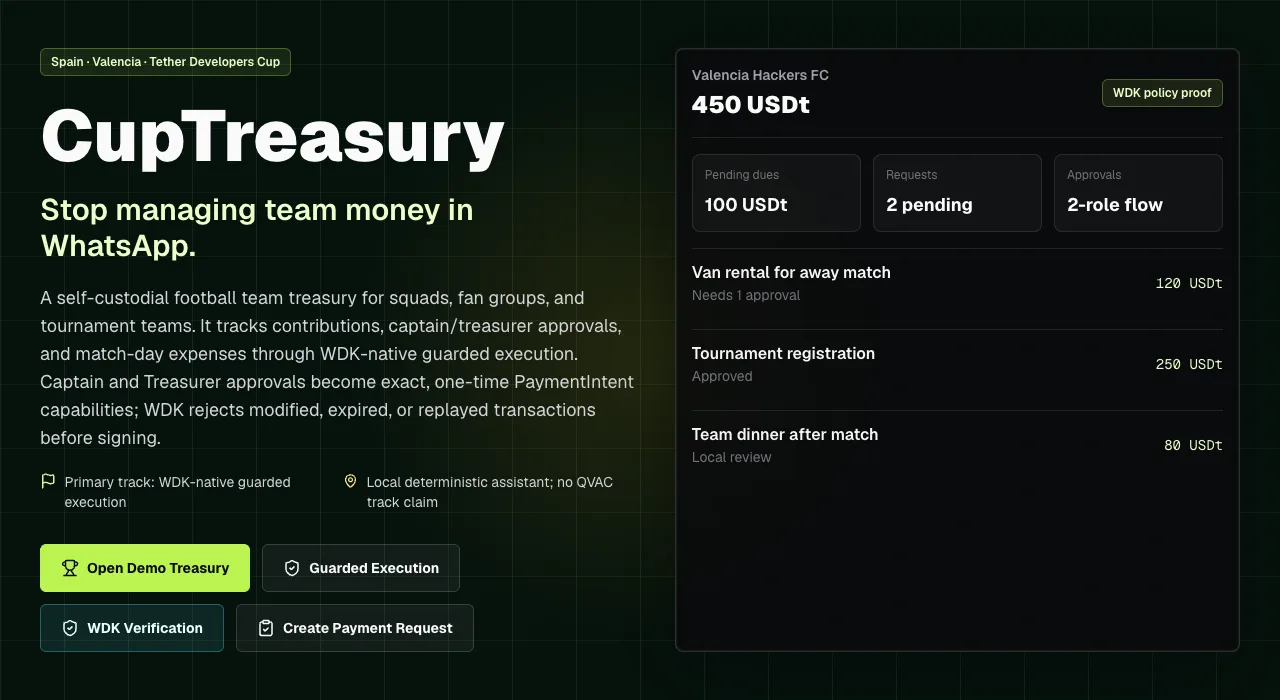
A self-custodial football team treasury with deterministic approvals and WDK-guarded payment intents.
The prototype models squad contributions and match-day expenses, then turns role-based approvals into exact payment capabilities with policy simulation and safe no-broadcast signing.
My contribution: Designed and built the treasury product, Captain/Treasurer approval model, guarded payment-intent flow, WDK proof surface, and automated verification.
Developer tooling
Fondant extends the portfolio beyond application delivery into repeatable Casper development and testing workflows.
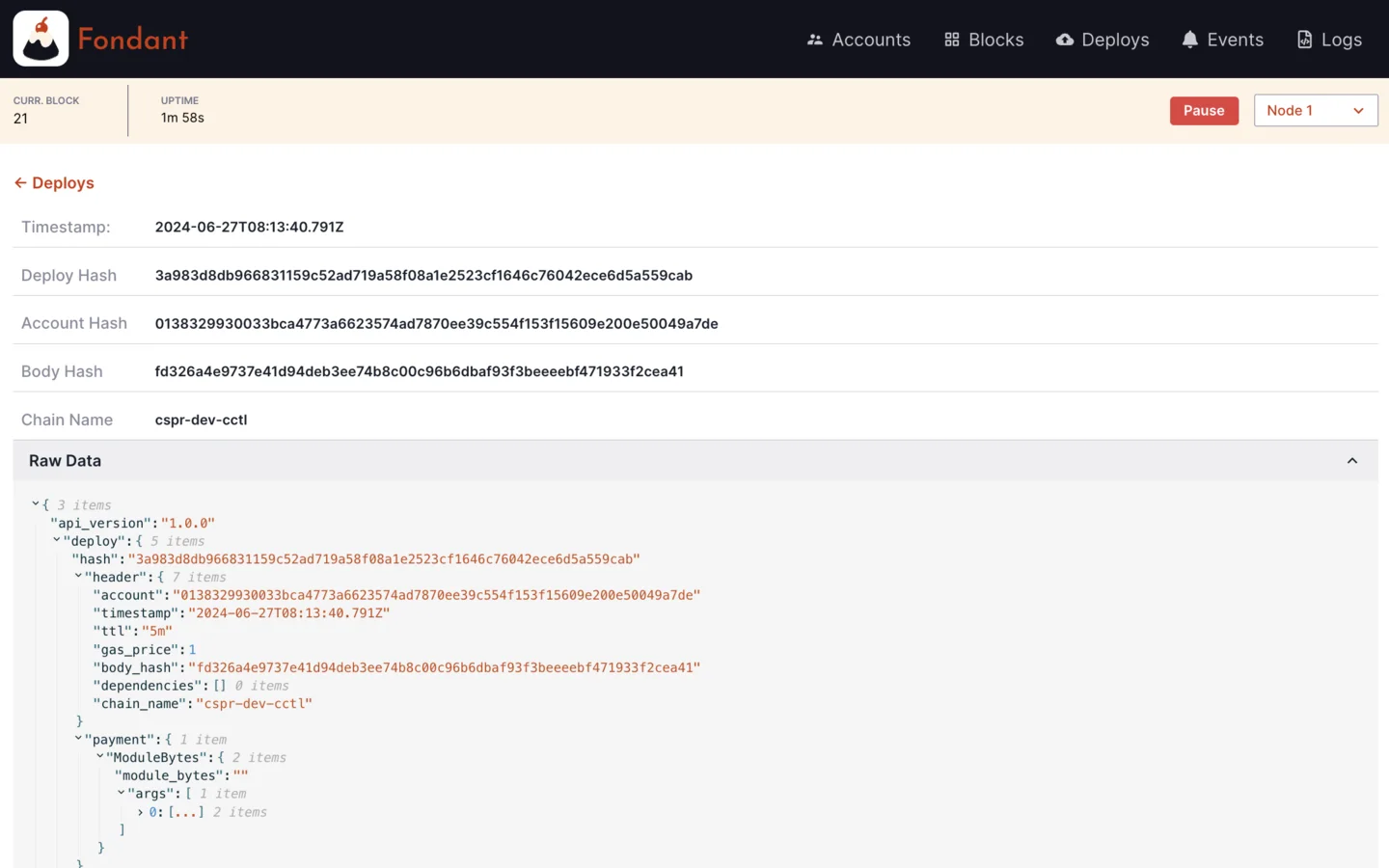
A Ganache-like local testing environment for Casper smart contract workflows.
A blockchain application suite and Ganache-like testing environment for the Casper blockchain, packaging CCTL functionality in a Docker-based UI to improve local development and testing workflows.
Technical focus
My current focus is the intersection of backend systems, DeFi and protocol engineering, smart contracts, and real-world operational workflows.
Signed intent, settlement, protocol state machines, token flows, access boundaries, and adversarial smart-contract verification.
Production services, persistence, authentication, federation, asynchronous processing, external integrations, and operational backend design.
User-facing products that connect interfaces, data, identity, operational workflows, mobile platforms, and blockchain interactions.
Persistence, containerized environments, CI/CD, deployment workflows, observability, documentation, and third-party integration boundaries.
Engineering background
My industrial automation background gives me a practical systems mindset: model the process clearly, handle edge cases, keep state reliable, and design for real operational constraints.
Start from actors, constraints, state transitions, and operational risk before choosing the technical shape.
Make contracts, APIs, and integration boundaries readable enough to review, test, and maintain.
Treat providers, wallets, networks, identity checks, and external data sources as reliability boundaries.
Treat rollout, observability, incident analysis, documentation, and maintainability as part of engineering rather than follow-up work.
Explore
Architecture, technical decisions, reliability considerations, and project proof are documented throughout the site.